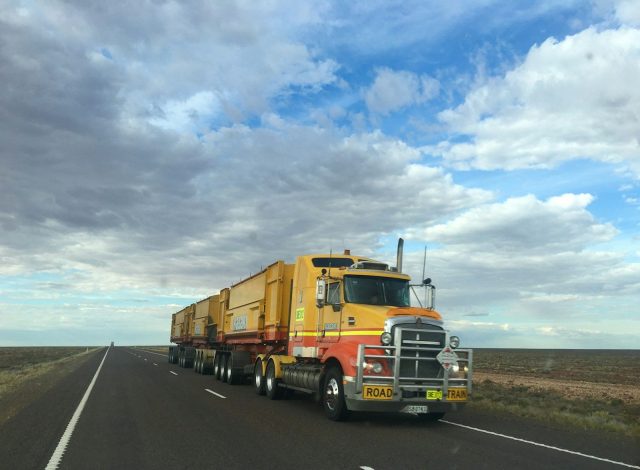
A box truck rolls up to a green light, signal on, and starts a slow right turn across a bike lane. A cyclist is already inside the intersection, tucked along the curb where the driver’s side mirror can’t reach her. The trailer clips her. Five years ago, the story that reached the insurance adjuster would have been built almost entirely from the driver’s account, a police diagram, and a handful of witness statements from people who showed up after the fact.
Today, on a truck with a 360-degree camera rig, four to six cameras were rolling the whole time. The question riders, drivers, and defense adjusters are asking has shifted. Footage exists. What matters now is who sees it, when, and what it shows — questions a personal injury firm like Kinon Law now has to answer in the first days after a crash, not the first month.
What Does a 360-Degree Fleet Camera Actually Capture?
The systems going into new medium- and heavy-duty trucks aren’t a single dashcam anymore. They’re a rig of cameras stitched into a bird’s-eye view around the cab, paired with side-facing units mounted near the mirrors and along the trailer. Fleet operators use them for backing, tight urban maneuvers, and coaching drivers through close calls. Daimler Truck North America recently began factory-installing 360-degree camera systems on its medium-duty vocational trucks, and other OEMs are following the same path.
For a right-hook crash, the side and rear-quarter cameras are the ones that matter. They cover the exact zone the driver can’t see in a mirror sweep — the zone a cyclist or pedestrian tends to occupy right before the turn. When the footage exists and gets preserved, it turns what used to be a swearing contest into something closer to a replay.
Why Right-Hook Cases Used to Favor the Driver
Right-hook crashes are the ones where a vehicle turning right cuts across a cyclist or pedestrian moving straight on the near side. On a big truck, the geometry is brutal. The right-side blind spot is the largest around the vehicle, and it’s exactly where a rider tends to be during a slow approach to an intersection.
Before video, the driver almost always had the cleaner story. The rider couldn’t testify, or couldn’t remember, or told a version a diagram couldn’t quite prove. The truck’s Electronic Logging Device might show speed and brake input, but nothing about what sat next to the cab. Investigators worked with skid marks, damage patterns, and whatever a bystander thought they saw.
How Does Video Change Who Gets Blamed?
Footage cuts both ways, and honest lawyers say so out loud. A clip can show a driver initiating a turn without a mirror check, or it can show a cyclist accelerating from behind the trailer into a space the driver had already committed to. Same crash type, opposite outcomes.
Attorneys handling these cases now build the theory of the crash around the footage from day one.
How Fast Can the Footage Disappear?
Here’s the part most injured riders don’t know, and it’s the part that decides cases behind the scenes. Fleet video is not saved forever. Event-triggered clips typically live in cloud storage for a limited window, and continuous-loop footage on the vehicle itself gets overwritten on a rolling basis. Retention windows vary by carrier and by system, but they are often measured in weeks, not years.
A preservation letter sent to the motor carrier in the first days after a crash is what stops the overwrite clock. Without one, the clip that would have settled the case can be gone before anyone opens a file. The same goes for the truck’s onboard logs and any driver-facing camera footage.
What Should a Rider or Driver Do in the First 48 Hours?
The window to lock down evidence is short. A few concrete steps in the first two days do more to shape the case than anything that happens later:
- Write down the truck details. Carrier name off the door, DOT number, trailer number, plate, and any visible camera housings on the cab and trailer. Photograph them if you can.
- Get medical care on the record. Even for injuries that feel minor at the scene. A same-day record ties the injury to the crash in a way a later visit cannot.
- Ask for the crash report number. The responding officer’s report is what an attorney or an adjuster will pull first, and having the number speeds everything that follows.
- Send a preservation letter. Or have a lawyer do it. This is the single step that keeps the side-camera footage from being overwritten while everyone else is still gathering paperwork.
- Hold off on a recorded statement. Insurers for the carrier will call quickly. No rule says you have to talk to them before you understand what the footage shows.
Right-hook crashes have historically been one of the hardest fact patterns for an injured cyclist to win, because the driver had the only usable account of a moment nobody else watched. That’s changing fleet by fleet as 360-degree systems become standard equipment. The evidence is out there. It doesn’t wait for you to ask for it, and it doesn’t automatically favor either side.