
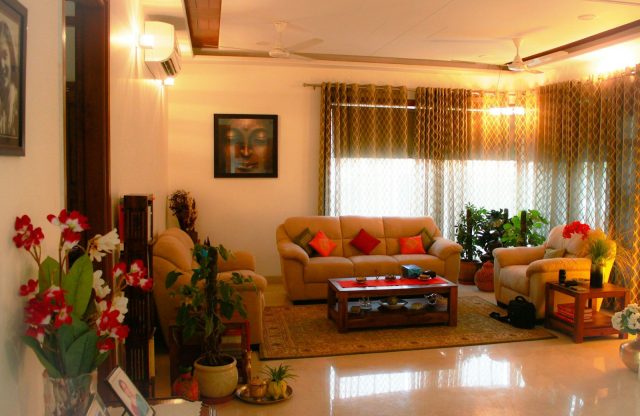
Traditional Indian architecture has long shared an intimate association with nature through earthy shades. Colours like ochre and terracotta bring this connection indoors with a contemporary twist.
If you are looking for authentic home décor inspirations, these classic tones add lasting warmth and visual appeal to modern spaces.
Classic Indian Palettes for Living Spaces
Indian homes experience seasonal variations, strong sunlight and the rhythm of busy family life. They need wall finishes that soften the daylight from balconies and add depth to small interiors.
Earthy room colour combinations work naturally with Indian architecture. Many of these are inspired by the materials found across the country, including clay pottery, sun-baked bricks and natural minerals. They work well with carved teak, brass lamps and cane furniture, making large living areas feel cosier and helping small apartments look more spacious.
Colour Combination Ideas for Every Room in an Indian Home
Bedroom
The bedroom should feel calm and restful, with soothing shades that encourage relaxation and restful sleep after a long day.
- Terracotta paired with soft ivory results in a striking accent wall that reflects light softly.
- Sage green with gentle beige introduces a crisp, nature-inspired ambience.
Living Room
Since the living room is the social centre of the home, it should feel radiant, open and lively.
- Ochre paired with delicate cream makes a cheerful Indian hall colour combination that illuminates the room and encourages conversation.
- Royal peacock blue with muted grey gives the room a sophisticated look and also complements elaborate artwork and wooden furniture.
Kitchen
Kitchens are active, high-traffic zones that benefit from durable finishes and vibrant shades.
- Terracotta accents with off-white cabinetry add a time-honoured touch while keeping the kitchen neat and bright.
- Mustard yellow with slate grey gives the kitchen an energised appearance while helping conceal cooking stains and other imperfections.
Prayer Room
A prayer room is a space for daily devotional rituals, so it works best with shades that offer calm and clarity.
- Ochre paired with sandalwood beige introduces a sunlit glow that represents an antique temple.
- Marigold orange with off-white brings a subtle festive spirit to everyday pujas and traditional ceremonies.
Ochre Versus Terracotta: Key Differences
| Aspect | Ochre | Terracotta |
| Colour Family | Earthy yellow | Vibrant red-orange clay |
| Main Undertone | Golden, mustard and sandy | Crimson, rust and fired earth |
| Nature-Inspired Association | Natural clay and dry sands | Baked clay, pottery and roof tiles |
| Visual Character and Intensity | Glowing, warm and joyful | Deep, soil-toned and rustic |
| Traditional Use | Temple courtyards and regional wall art | Earthenware and exterior floor tiles |
| Best Pairings | Cream, crisp white and charcoal | Sage green, off-white and natural timber |
| Appearance Under Lighting | Soft and rich in daylight and warm light | Richer and deeper under warm lighting |
How Natural Colours Look in Different Lighting
Natural shades can change character throughout the day depending on the amount and type of light in a room. For example, ochre tends to appear brighter and more golden in natural daylight, while terracotta can look warmer and richer under evening lights.
In rooms with plenty of sunlight, pairing earthy colours with soft whites or beige can create a balanced, airy feel. For spaces with limited natural light, lighter versions can add warmth without making the room feel smaller.
Choosing the right finish and colour combination can help homes feel comfortable and inviting from morning to night.
Conclusion
Traditional earth colours can bring warmth, a grounded feel and a sense of Indian heritage to modern homes.
The versatile range of JSW Paints colour shades makes it easy to bring these timeless natural tones to your walls with a lasting finish. Well-thought-out colour choices can transform ordinary rooms into inviting, elegant spaces for the entire family.