
Preface
The cooling method is one of the very important considerations when choosing a laser welding machine. It affects the welding stability, working duration, portability and long-term reliability of the equipment. Both air cooling and water cooling systems have their own advantages, and the suitable choice depends on the size of the workshop, the materials being processed, and your production requirements.
This guide will compare air cooling and water cooling methods, and help you select the more suitable configuration based on the actual welding environment.
What Air-Cooled Laser Welders Offer
The air-cooled fiber laser welder uses built-in fans and heat sinks to disperse the heat generated by the laser source and optical components during operation, and expel it outside the equipment.
Key Advantages:
- Compact size (ideal for small workshops)
- Lower maintenance (no water tank or filters)
- Lightweight and portable
- Fast installation—plug and weld
- Lower cost compared to water-cooled systems
Since no additional water-cooling units are required, the air-cooling equipment is particularly suitable for garage-style workspaces, mobile repair sites, and small processing rooms with limited space.
Where Air-Cooled Laser Welders Perform Best
Due to its simple structure, the cooling equipment is highly suitable for small workshops, on-site maintenance work, and applications where continuous operation at high power for a long time is not required.
Air-cooled systems are ideal for:
- Stainless steel sheet welding
- Mild steel repair work
- On-site or mobile fabrication
- Jewelry repair and thin-metal tasks
- Workshops with basic electrical capacity
Limitations
- Not ideal for long continuous welding
- Lower cooling efficiency at high power
- Can struggle with 2000–3000W duty cycles
Wind-cooled welding machines perform particularly well in scenarios where the welding time is short and high flexibility is required.
How Dynalasers Air-Cooled Systems Support Reliable Welding Performance
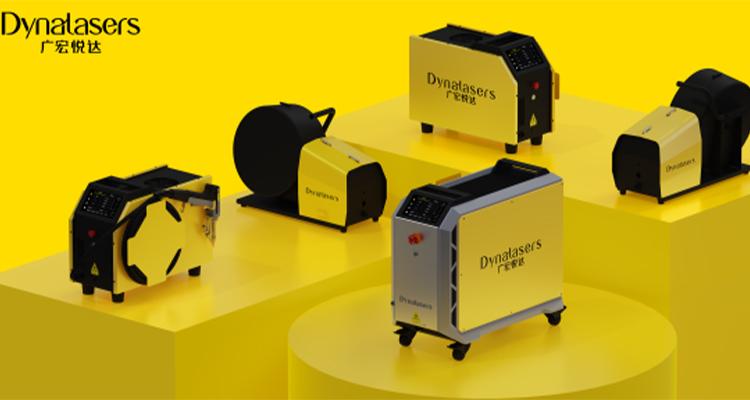
Dynalasers laser welding company has designed its air-cooling system with the aim of ensuring stable temperature, consistent beam quality and reliable operation under various welding conditions. Below are the powerful products that support air-cooling technology:
M Series — Versatile Handheld Air-Cooled Laser Welder
Built for multi-material work and medium-thickness metals, offering a balanced mix of power and adaptability within an air-cooled design.
D Series — High-Duty Phase-Change Air-Cooled Machines
Engineered with an advanced phase-change cooling structure that supports continuous output up to 1800 W, maintaining temperature stability during extended welding sessions.
S Series — Ultra-Portable Air-Cooled Laser Welder
A lightweight platform under 8 kg, ideal for on-site work, repair tasks, and small production spaces where mobility is essential.
Among all the product series, Dynalasers has adopted its own developed fiber laser source and intelligent cooling system. Even under complex working conditions, it can maintain stable beam quality.
What Water-Cooled Laser Welders Offer
The water-cooled welding machine employs a closed-loop cooling system, which can maintain a stable temperature throughout long periods of or high-load welding.
Key Advantages:
- Superior heat dissipation
- Consistent performance at high power (2000W–3000W)
- Longer continuous duty cycles
- Better stability on thick materials
- Lower internal temperatures = longer laser source lifespan
Their powerful cooling capabilities ensure that the equipment remains stable during high-intensity, industrial-level welding operations, preventing it from shutting down due to overheating.
Where Water-Cooled Laser Welders Perform Best
Water-cooled laser welding machines are more suitable for applications that require high power, long-term continuous operation, and strict temperature control. Due to their stronger cooling capacity, they can maintain stable performance during long-term continuous welding.
Water-cooled models are ideal for:
- Structural steel welding
- Thick aluminum components
- Long production runs
- Automotive fabrication lines
- High-power welds with deep penetration
Limitations
- Heavier and less portable
- Requires water circulation, filter changes, and coolant checks
- More expensive upfront
- Not ideal for cramped spaces unless ventilation is well designed
Although water-cooled machines are less portable than air-cooled devices, their outstanding heat dissipation capabilities make them an ideal choice for deep penetration welding, thick metal welding, and long-term continuous processing.
Cooling Efficiency Comparison of Air-Cooled and Water-Cooled Welder
| Feature | Air-Cooled | Water-Cooled |
|---|---|---|
| Heat Dissipation | Moderate | Excellent |
| Duty Cycle | Medium | High |
| Portability | Very good | Limited |
| Installation | Simple | Requires water tank |
| Noise Level | Moderate | Low–moderate |
| Best Power Range | 1000W–1500W | 2000W–3000W |
| Best For | Small workshops, mobile use | Industrial workshops, thick metals |
What Maintenance Each Type of Laser Welder Requires
Different cooling methods have their own specific focuses in maintenance, particularly in aspects such as airflow management, filtration cleaning, and temperature control.
Air-Cooled
- Clean air filters
- Ensure good airflow
- Keep vents dust-free
- Avoid placing against walls
Water-Cooled
- Replace coolant periodically
- Clean or replace water filters
- Check pump flow
- Ensure no condensation forms near optics
For maintenance institutions that are accustomed to handling gas pipelines or optical lenses, the operation of the water-cooling system is usually considered to be relatively easy to master and manage.
How Cooling Systems Affect Laser Welder Energy Consumption
The energy consumption differences between air-cooled and water-cooled laser welding machines are quite obvious. Understanding the power consumption characteristics of each type can help you choose the more suitable welding machine model.
Air-Cooled
- Lower energy use
- No external chiller
- Ideal for workshops with limited power supply
Water-Cooled
- Higher overall energy consumption
- Chiller adds continuous electrical load
- More stable temperature control for long welds
If your workshop frequently uses high-power welding machines with a power rating of 2000W or higher, a more stable cooling system can usually offset the additional energy consumption costs it incurs, making it a more cost-effective option overall.
Choosing the Right System for Your Workshop
Different cooling methods are suitable for different welding environments. When making a choice, the key is to determine based on the power required by the workshop, the continuous working time, and the mobility of the equipment.
Choose Air-Cooled If You Need:
- Portability
- Compact size
- Simple setup
- Light-to-medium welding tasks
- A budget-friendly solution
Choose Water-Cooled If You Need:
- Long continuous welding
- High power (2000W–3000W) stability
- Deep penetration on thick materials
- Industrial-level reliability
- Reduced overheating risk
Based on your production requirements, choosing the appropriate cooling method is beneficial for maintaining stable welding quality and enhancing overall efficiency.
Conclusion
When choosing between air-cooled and water-cooled laser welding machines, it is necessary to evaluate based on the size of the workshop, power requirements, and daily workload. The air-cooling system is lightweight and easy to use, suitable for small workshops and flexible operations; the water-cooling system, on the other hand, performs more stably and durably in long-term, high-power welding, and is more suitable for heavy production environments.
If you are unsure which cooling method is more suitable for your workflow, you can also contact the Dynalasers team for professional advice. We will recommend the most suitable portable fiber laser welding machine for you based on your material type, power requirements and working environment.